MNS POWER     SALES (480) 326-8038  SUPPORT (480) 278-2591    


HOME             PRODUCTS            DIY FREE PLANS                DISTRIBUTOR            HOME             CONTACT US               FAQ


Make your own power with a pedal power bicycle generator.

MAKE YOUR OWN GENERATOR


READY TO SHIP

GENERATOR SYSTEMS

LIGHT BULB

EDUCATIONAL DISPLAYS


ALTERNATIVE ENERGY

EDUCATIONAL DISPLAYS


FREE VIDEO PLANS / INSTRUCTIONS  FOR DO IT YOURSELFERS


 STEP 1

Video 1

Free video plans instructions for DIY  pedal power bicycle generator dynamo

Installing

Generator & Plate

STEP 2

Video 2

Connecting to

Blower & Light

STEP 3

Video 3

Installing

Charge Controller


STEP 4

Video 4a                   Video 4b


Installing Blocking  Diode - Easy Video For The  Beginner

STEP5

Video 5

Verifying It Works


NOTE:   Someone who works out every day can put out between 200 and 300 Watts of power.  

Those who are not in so good shape can put out around 80 to 100 Watts of power as shown on the one hour workout graph above.

And Finally - Someone who is a competitive cycler can put out up to 500 Watts!!


SUGGESTED PARTS

(Numbers on picture match up to items in table below)


item

US price Instructions Info Amazon Credit Card
1 600 Watt Duracell Battery Powerpack $149   learn more order  
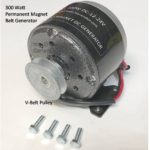
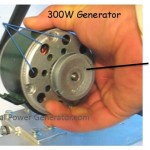
2 300 Watt DC Generator $199 video learn more  Order order
3 Adjustable V-belt $79 video  learn more  Order order
4 12V  Charge Controller $159 video  learn more  Order order
5 Aluminum Adapter Plate $129 video plans  Order order
6 Bike Trainer Exercise Stand $79 video  learn more  order  
7 Blocking Diode $89 video  learn more  Order order
8 Terminal Blocks & Wiring Kit for charge controller $49 video

 learn more


order

9

OPTIONAL - WattsVIEW Power Monitor for windows

$223      Order  


SCHEMATIC DIAGRAM

This pedal power generator stand can be used by small children on small bikes or by adults on full size bikes.   See test results info below for benchmarking information.    This data was recorded using a WattsVIEW power monitor while charging a 12V Deep cycle Duracell Battery Powerpack during a one hour charging session.  For more information see the  FAQ WEBPAGE.  If you want to buy a generator stand you don't have to put together then take a look HERE.


TEST RESULTS  / BENCHMARKING RESULTS

VOLTS / AMPS

WATTS

WATT HOURS

AMP HOURS

CALORIES


DIY 12V DC PEDAL POWER BICYCLE GENERATOR KITS


MODEL

GENERATOR DYNAMO

fid

d

Specifications

VOLTS

odd

d

did

EXPLAIN

RATED CURRENT

d

d

EXPLAIN

BIKE STAND

d

d

EXPLAIN

V-BELT

d

d

d

EXPLAIN

ADAPTER PLATE

a

a

EXPLAIN

BATTERY CHARGE CONTROLLER

mns

EXPLAIN

BLOCKING DIODE

a

a

EXPLAIN

DC to AC CONVERTER BOX

PRICE

PayPal

OUTSIDE U.S.

PPG-B300-K

BASIC 300 WATTt DIY BELT DRIVE BIKE GENERATOR KIT, 300W, 0-40V DC, 20 AMPS

0 to 40 DC

15A Nom

20A Peak

$499

Get Quote

PPG-B300-K-CC

BATTERY CHARGING 300 WATT DIY BELT DRIVE BIKE GENERATOR KIT 300W, 12V DC, 20 AMPS WITH 25 AMP CHARGE CONTROLLER (USE WITH DURACELL POWERPACK)

0 to 40 DC

15A Nom

20A Peak

  $750 Get Quote

PPG-B300-K-110VAC

110V AC OUTPUT BELT DRIVE BIKE GENERATOR KIT,  300W
110V AC

2A Nom

3A Peak

    $999 Get Quote


SUGGESTED TOOLS & ACCESSORIES

Description     PayPal Amazon
Digital Multimeter,  this is very helpful to have! $12.73    order
Wire Crimpers / Cutters $19.93   order
Wire Strippers $12.80      order
TIRE LEVERS $5.00   Order
Regular style fuse holder for cars.  Get a 20 Amps or 15 Amp fuse from your loal auto store.

FUSES -  You can easily use a regular 20 Amp fuse from AutoZone or any other auto store,  or you can use a thermal resettable fuse.  The video instructions show a thermal fuse being used in Video #3  You can use either option.     If you purchase the wiring kit  you will receive the resettable fuse for your generator. 

$3.51 Bussmann BP/HHD ATC Fuse Holder    Order
You can order the thermal fuse for $14.99 from MNS Power. A thermal fuse gets hot when too much current is flows through it and then opens up until you stop pedaling.  This is called an er current protection device.   After 20 seconds the thermal fuse will cool down and the pedal power system will be ready to use again.  This fuse should never trip an if it does, it means there is something wrong with your wiring.  

Part number:

507-1325-ND


$14.99 0ZRB0700FF1A  Order  


Do it yourself Bike Generator Wiring Kit for Charge Controller

If you want to charge 12V batteries or a 12V powerpack,  you may want this wiring kit which includes wire, terminal blocks, thermal fuses, and mounting screws as shown in the video

In order for you to use this wire kit, you will need to get a set of wire strippers and wire crimpers.

[ENLARGE]

Do it yourself Bike Generator Wiring Kit


Use these free videos and plans to make your own pedal power bicycle generator station.  Good for powering up your television or charging a battery or powering CFL /  LED lights .  Great source of emergency survival power and an alternative green energy source. 


Specifications

Dynamo Model

MNS-300-DC

Output Voltage Range

0 to 40 Volts DC

Nominal Current Rating

15 Amps

Peak Current Rating

20 Amps

Peak Power Output: 

(Charging 12V Battery )

300 Watts (15V X 20 Amps)

Drive Type

2" Diameter Pulley

Peak Operating Temperature

100 Degrees C

Cooling Method

Air Cooled

Shaft Bearing Type

Ball Bearing

Mounting Bolt Size

6 mm

Wire Lead Length

~12"

Wire Lead Size

Size 12 AWG

Approx Weight

~8 Lbs

Number of Poles (Brushes)

4

Generator Type

This is a DC permanent magnet motor

being used as a generator.

Peak to Peak Voltage

Varies depending on RPMs

(See this Output Waveform)

Voltage Output Vs. RPM

Voltage Curve Graph

Rated Operating Speed

2800 RPMs

Internal Resistance

0.35 Ohms

(See Resistance Graph)

Typical Amp Hours during 1 hour of use ~6  @12V
Typical Amp Hours during 1 hour of use 100 Watt Hours (0.1 KWH)


Voltage Output Graph

In the most basic of terms, a bicycle generator creates a potential energy when you move the pedals on your bicycle.   The potential energy is measured in terms of "Volts".  The faster you pedal on your bicycle, the higher the Voltage reading from your generator.   If you want to see a video demonstration of how this works the go to http://www.youtube.com/watch?v=mCI_Ke1tA4o


A "no load" condition is when you have nothing hooked up to your generator.  It also means that you have have ZERO Amps of current flowing from you bike generator.    While pedaling your bicycle generator in a no load condition, you will notice that you feel no resistance to your efforts,  so you will be able to sit there for hours without breaking a sweat.  


The amount of power from your generator is measured in terms of "Watts".   The formula for Watts is  Volts X Amps.   So in a no load condition with you pedaling the generator at 2000 RPM, you will be putting out 12 Volts X 0 Amps = ZERO Watts.


If you were to connect a load to your generator such as a Duracell lead acid rechargeable battery powerpack or a light bulb, then you would suddenly feel a resistance to your pedaling and you would begin to sweat.   If you use something called a DMM or digital multi meter, you can measure the Volts and Amps from your bike generator and then calculate how many Watts you are putting out.   For more information see the FAQ


If you are a non technical person, then please skip this section below.  It's for geeks.

bicycle generator voltage output vs rpm for varying loads 5 amps and 10 amps


The data displayed on the above chart shows you three test case scenarios where the bicycle generator load is varied from zero, to five, and then 10 Amps of current.   For a more in depth discussion on generator theory click here


WATCH 1 Minute VIDEO DEMONSTRATION (click on screen)


     TEST RESULTS                SCHEMATIC


INSTRUCTIONS
 
DIY  STEP 1 INSTALL THE GENERATOR & BELT   Video 1

Take  A look at the video to see how to install the generator and belt on your system. 


DIY STEP 2 USE A VOLT METER TO CHECK GENERATOR IS WORKING-  Also see Video 1


MOUNT THE CHARGE CONTROLLER
  • At this point you could just hook up a floating ball display or light bulb to your generator.  To do this, take a look at Video 2

  • If you want to store your energy into a battery powerpack like the Duracell powerpack then you should install a charge controller and blocking diode.  Take a look at  Video 3

  • To remove your rear tire watch Video 4


 DIY  STEP 18

INSTALL BLOCKING DIODE


INSTRUCTIONAL VIDEOS

PART 1                                            PART 2


If you want to store your energy into a battery or powerpack, you should use a blocking diode.  If you want to learn why take a look at the explanation at http://blockingdiode.com

Strip and crimp generator side of diode.


Attach the generator side of the blocking diode to the generator output terminals.  Strip and crimp wires to a cigarette lighter plug.  Put on crimpers as shown in this photo. Connect the diode to the powerpack as shown.


SCHEMATIC / WIRING DIAGRAM


[ENLARGE]


PART ACCESSORIES TO BUY       

Description     Credit Card Amazon

12 VOLT 33AH DEEP CYCLE  Battery Sealed Non Spill AGM

$60  


 Order

MNS INVERTER

14-60VDC INPUT, 110V AC Out - 300 Watts


This device will take the output of your bike generator and convert it over to 110V AC power which his what you plug stuff into your home in the U.S.

$399  


14V DC-DC CONVERTER REGULATOR - 20A

This takes voltage from your generator and converts to 14.4 Volts DC so you can feed it into an AC inverter, or charge a lead acid battery with it.

$249    

WattsVIEW Serial / USB Power Monitor Software Data logger

(Windows 2000, XP, 7)  VIDEO DEMO

$199  Order


TERMS & CONDITIONS                                                

  1. By following these FREE DIY BYO plans you agree to not operate this pedal power generator around small children or any individual who might stick their fingers in the wheel, chain, sprocket, or belt while it is moving.

  2. You also agree not to allow anyone near this bike generator with long hair or loose clothing that could possibly get it stuck and pulled in to the belt / chain / wheel assembly while being operated and cause injury or death.

  3. Also, By following these DIY STEPs, you assume all liability and responsibility for owning and operating you own pedal power bicycle generator.  You also agree to have a licensed electrician check over your assembled unit to make sure you have not wired up something up incorrectly BEFORE you hook it up to any kind of high power devices such as battery packs or lead acid batteries.  Also, before you charge a Powerpack with your pedal power bicycle generator, you will read and understand the safety section of the owner's manual. 

  4. You also agree to send me a photo of your final project to share with others on this web page.


GENERATOR TECHNICAL DISCUSSION

A typical person can get on a bicycle generator system and turn the generator at 2500 RPMS.   If you were to put a volt meter on the generator while it was spinning at this rate, then you would see a DC voltage somewhere near 14 Volts (See White Line@ 2500 RPM).  However, if you have a 5 Amp load on your generator, like the load from charging a battery or powering a light, then your voltage output would drop down to somewhere near 12.5 Volts (See the Red line@ 2500 RPM).  This phenomena is sometimes called "Voltage Droop"  or "IR Drop"   This data is often displayed in the form of a "Load Line". 


bicycle generator voltage output vs rpm for varying loads 5 amps and 10 amps


This information is significant because it helps understand how much faster you would have to pedal when delivering 100 Watts to a rechargeable lead acid battery.  If the battery charge voltage is supposed to be at 14.8 Volts DC, and you plan on putting 100 Watts into the battery, then the amount of current from your pedal power bike generator would be :    100 / 14.8 =  6.7 Amps    


So based on this information - you would need to pedal your generator at about 3,200 RPM. (Approximating the path of the red line off to the right of the graph you can guestimate about 3,200 RPM).


 You electrical people may be looking at the data attempting to  approximating internal armature resistance of the bicycle generator.   For your convenience, that information is displayed below on the generator internal resistance graph. 


For those of you not so technical - a generator with an internal resistance of zero Ohms is the ideal generator - which unfortunately does not exist, but is what many strive for.  Internal resistance of a generator is bad because power is lost in the form of heat inside the generator.


 One can see that the approximate resistance is about 0.35 ohms. This is a Permanent magnet DC motor working as a generator. It has a voltage rating of 24V with four poles.  A two pole device would have more resistance & more power loss.


 Chart Graph Plot of Bicycle Generator Internal armature resistance 4 pole